





Skip El Born on Weekends (and Where to Go Instead)
El Born is, for many, a postcard image of Barcelona: narrow cobbled streets, small designer shops, Instagram-ready cafés, and the medieval outline of the Passeig del Born. But on a Saturday afternoon that postcard can quickly turn into an indecipherable mess: long queues, tour groups with wheeled suitcases, hurried servers and a high chance of basic safety problems like pickpockets. If you like the idea of a lively but authentic neighborhood, the gap between El Born’s tourist-fiction and the reality of a real Barcelona weekend deserves a bit of critical thought. This piece takes a contrarian tone: it’s not saying “never go,” but it explains why El Born is often a poor choice for a weekend — and, crucially, offers concrete, local, well-situated alternatives with addresses, opening hours and prices where relevant.
Taking this nuanced view doesn’t deny El Born’s qualities: interesting architecture, famed restaurants like Cal Pep (but expect endless queues) and museums such as the Museu Picasso (often packed). The issue arises when the experience promised — wandering, discovery, calm — is replaced by an accelerated consumption of the place. Overrating the neighborhood, in this context, means the space is set up to satisfy a massive tourist flow rather than to sustain local life. Shops turn into showcases, the street becomes a corridor, and authenticity is measured in “likes” rather than lived moments.
So, rather than putting up with the neighborhood’s hyper-commercial version, pick an alternative that respects your time, curiosity and need for calm. In the sections that follow I outline why El Born can disappoint on weekends (with concrete examples), then suggest three complementary alternatives — a local market with fewer tourists, a more authentic pintxos/bar street, and gardens/green spaces ideal for disconnecting — each with exact addresses, opening hours, indicative prices and local tips to make the most of your visit. The options chosen aim to restore the Barcelona that guidebooks often forget: where locals grab their coffee, where shops endure, and where you can breathe without constantly hearing ten different languages.
1) Why El Born Is Often Overhyped on Weekends (and What That Costs Your Visit)
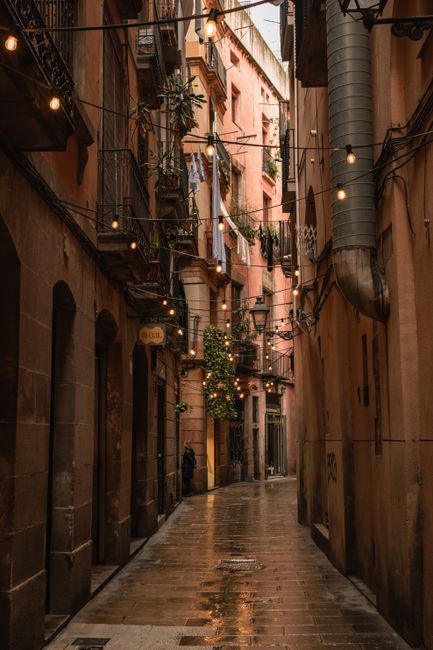
El Born suffers from a triple dynamic: tourist gentrification, a concentration of paid attractions and the “must-see” effect amplified by social media. Practically speaking, this means queues outside iconic restaurants (expect 30–60 minutes for Cal Pep), crowded sidewalks, souvenir shops with inflated prices, and an atmosphere that encourages quick photos over slow observation. On Saturdays and Sundays, the area around Passeig del Born and Carrer de Montcada can attract thousands of people — cruise-day trippers, organized groups and hurried city visitors.
Practical consequences for your weekend: more noise, fewer seats, time lost in lines, and often a downgraded culinary experience (places that become “tourist-friendly” tend to serve faster but lower-quality food). Safety can also become a concern: pickpockets target densely packed areas. Finally, the quality of your cultural discovery suffers — museums overcrowded, no space to pause and look at a shop window, and fewer opportunities to chat with locals.
Another key point: value for money. In an overcrowded spot, everything costs more — cafés charging €3–5 for an average coffee, tapas inflated to €10–15 each at certain “classics”, and pricier parking or taxis if you’re pressed for time. And if your goal is to learn about the city, immersion is weaker: who really remembers what they saw in the middle of a rushed crowd?
Instead of insisting on following the same sightseeing route as everyone else, consider swapping a few hours in El Born for targeted alternatives: a local market for genuine food culture, a pintxos street with fewer tourists for better gastronomy, and a public garden for atmosphere. The sections below detail these alternatives with addresses and practical tips.
2) Alternative: Mercat de Sant Antoni — a Local, Authentic Market (Less Mass Tourism)
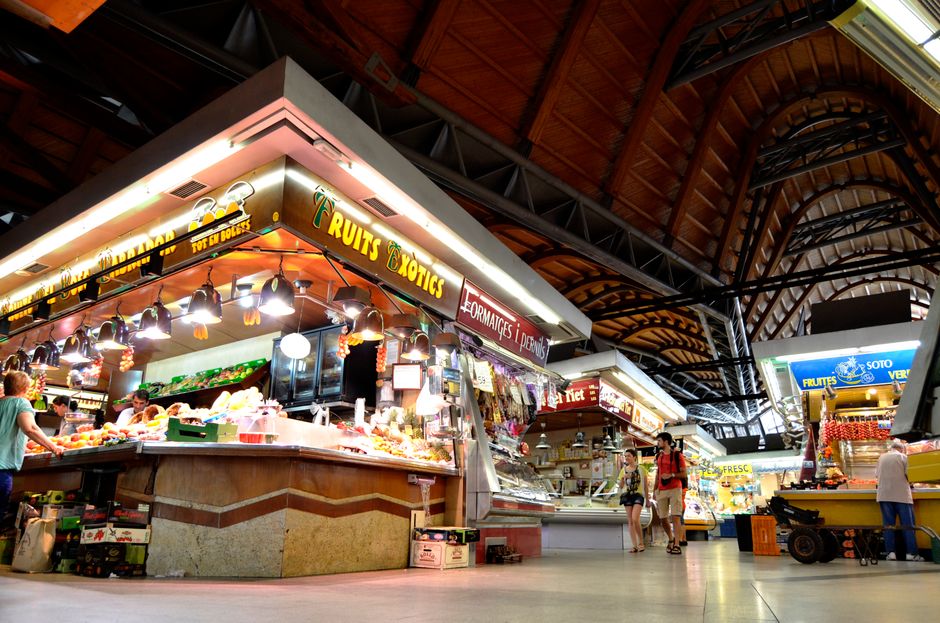
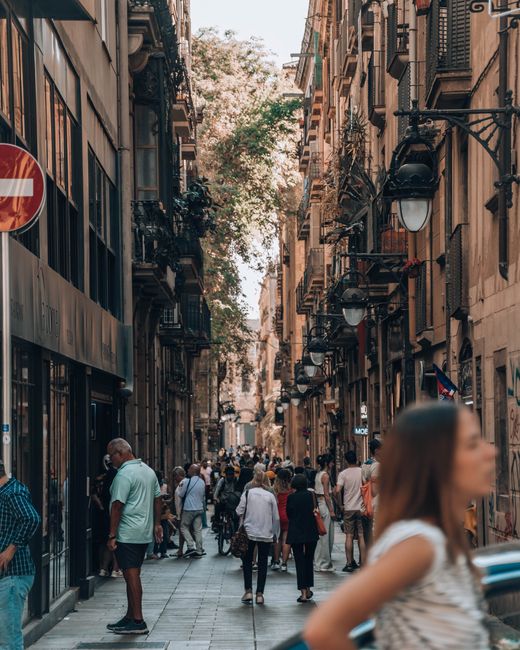
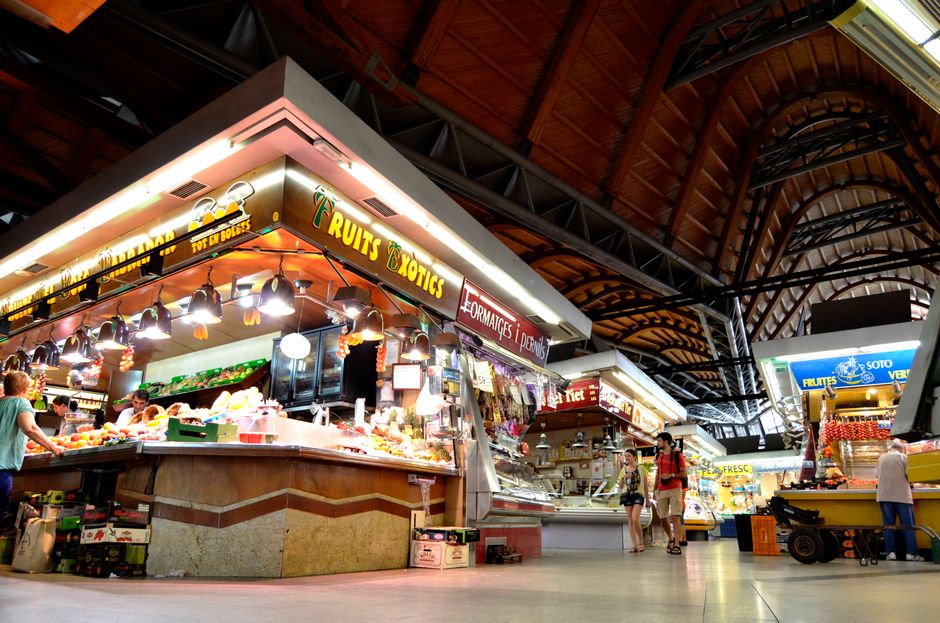
If you’re after Barcelona’s neighborhood market vibe where you can actually see local life, head to Mercat de Sant Antoni. Address: Carrer del Comte d’Urgell, 1, 08011 Barcelona. The renovated covered market is an impressive building and, importantly, not as saturated as La Boqueria. Stalls sell fruit, vegetables, fish, charcuterie, cheeses and a few local quick-food stands.
Opening hours: the central market runs broad hours — generally open Monday to Saturday, roughly 7:00–14:30 for the food stalls. On Sundays the outdoor area around the market hosts the famous Sunday book and collectibles market in the morning, usually from 8:00 to 14:00. Admission: free. Budget on site: plan €5–15 for a solid local breakfast (coffee + bocadillo or a tapa).
Why it’s a real alternative: you’ll see shop workers buying for their families, you can chat with butchers and cheesemongers, and taste Catalan products without the “tourist tax” markup. The market is also well-served by the metro (L2 / L3 / L5 nearby; Sant Antoni station on L2), making it a practical outing from anywhere in the city.
Local tips: arrive early (8:00–10:00) for the most authentic atmosphere, buy small portions to share (olives, cheeses, jamón), and take time for a sidewalk coffee. If you visit on a Sunday, combine the market with a stroll around the Sant Antoni neighborhood (independent shops, bookstores and cafés). It makes for a full, relaxed, and delicious day compared to pushing through El Born.
3) Alternative: Carrer de Blai, Poble-sec — Pintxos and Neighborhood Life Without the Queues
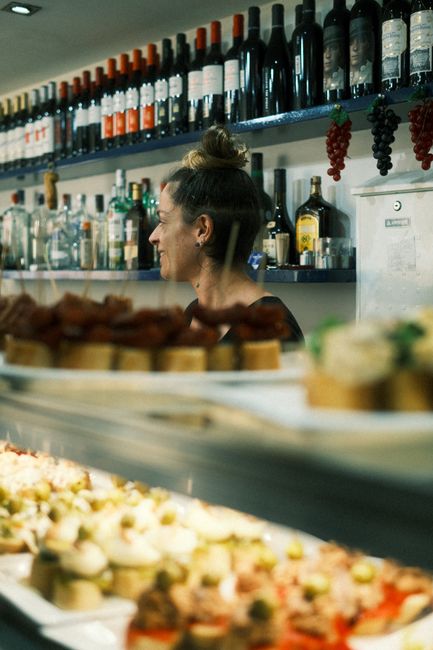
For an afternoon or evening of tapas that actually resembles what Barcelonans eat, take the metro to Poble-sec and stroll down Carrer de Blai (08004 Barcelona). This pintxos “rambla” has a string of bars where you can snack for very reasonable prices (typically €1.50–3.50 per pintxo). The vibe is relaxed, friendly and largely frequented by locals rather than organized tours.
Concrete example: Bar La Tasqueta de Blai — Carrer de Blai, 17, 08004 Barcelona. Hours: generally open 12:00–16:00 and 19:00–23:00, but check for evening times. Prices: pintxos from about €1.80; beer or a glass of wine €2.50–4. Another recommended spot: Vinitus Poble-sec, Carrer de Blai, 12 (modern tapas, portions €3–7).
Why choose Carrer de Blai on the weekend? There’s no tourist bottleneck: the street is long, the bars are many and turnover is quick. You can build your meal as you go, hopping to a new bar every two pintxos to vary flavors. Poble-sec, down from Montjuïc, keeps genuine neighborhood life: bakeries, small grocers, intimate courtyards — everything El Born tends to lose when it’s flooded by tourists.
Local tips: arrive around 20:00 for a lively but not overwhelmed atmosphere (Barcelonans eat late). To avoid crowds, go between 18:00–19:30 or after 22:30. Combine the evening with a walk up towards Montjuïc to see the city lights.
4) Nature Alternative: Quiet Gardens and Beaches — Jardí del Laberint d’Horta and Rambla de Poblenou
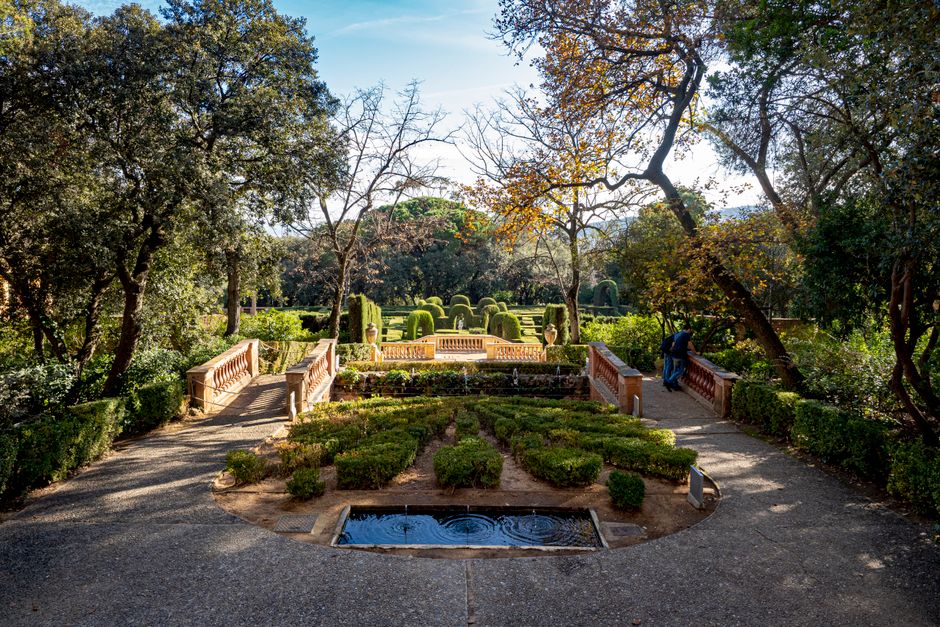
When your idea of a weekend includes calm, space and a breather away from crowds, two choices stand out: Parc del Laberint d’Horta and Rambla de Poblenou (with nearby beaches like Bogatell). Parc del Laberint d’Horta (Passeig dels Castanyers, 1, 08035 Barcelona) is a historic garden with paths, ponds and a boxwood maze. Hours: generally open 10:00–19:00 in high season; closed Mondays depending on the season. Price: around €3.50–4.50 for adults (reduced rates for students/seniors; free on certain days). It’s perfect for a contemplative morning, a picnic or reading in the shade.
Rambla de Poblenou (Rambla del Poblenou, 08005 Barcelona) is a quieter version of the central Rambla, lined with cafés, neighborhood bars and local shops. A five-minute walk takes you to the Bogatell and Nova Icària beaches, which are much calmer than Barceloneta at the weekend. Cafés along the Rambla serve breakfasts for €3–6, and for a simple midday seafood meal expect €10–18 per person at a good spot like Els Pescadors (Plaça Prim, 1, 08005 Barcelona; dishes €15–25).
Why these choices work: they give you space, a slower pace and a more local take on Barcelona pleasures. The park reconnects you with a historic, lesser-known Barcelona outside the tourist loop, while Poblenou combines sea, cafés and contemporary neighborhood life without being suffocated by crowds.
Local tips: for the Laberint arrive early (10:00) to enjoy the best light and the quiet. For Poblenou, plan a walk along the beach at sunset followed by dinner on the Rambla; book ahead if you want a specific restaurant like Els Pescadors, especially on weekends.

Conclusion — How to Make the Most of a Barcelona Weekend Without Sacrificing the Experience
Avoiding El Born on the weekend isn’t a moral commandment, but a strategy to preserve the quality of your trip. The core issue isn’t the neighborhood itself, but how it’s consumed when the crowd becomes the dominant element. On a short trip, every hour counts: waste it in a queue and you miss the chance for a conversation with an artisan, a genuinely shared meal or a moment of silence in a garden. The alternatives suggested — Mercat de Sant Antoni, Carrer de Blai in Poble-sec, Parc del Laberint d’Horta and Rambla de Poblenou/Bogatell — each offer what the average visitor is really looking for: authenticity, local flavors, space and a real connection to Barcelona’s rhythm.
Practical and concrete, these options are also budget-friendly and easy to reach: the market is free, pintxos help control costs, and gardens/beaches cost little or nothing. They also give you more flexibility with timing — go early or late and the experience changes far less than in El Born, where human density flattens every nuance. Finally, by choosing these alternatives you indirectly support more sustainable tourism: less pressure on the same streets, more income for shops and restaurants that actually serve locals.
Final concrete tip: plan a morning at Mercat de Sant Antoni (8:00–11:00), an afternoon in Parc del Laberint d’Horta (12:00–15:00 with a picnic), and an evening on Carrer de Blai (20:00–22:30). If you prefer the sea, swap the park for Rambla de Poblenou and a stroll to Bogatell beach at sunset. You’ll experience a truer, calmer and — above all — more memorable Barcelona than if you’d spent your weekend pushing through El Born.